
 PL
 DE
 CS
 SK
 SV
 HU
 BG
 RO
 UK
 FR
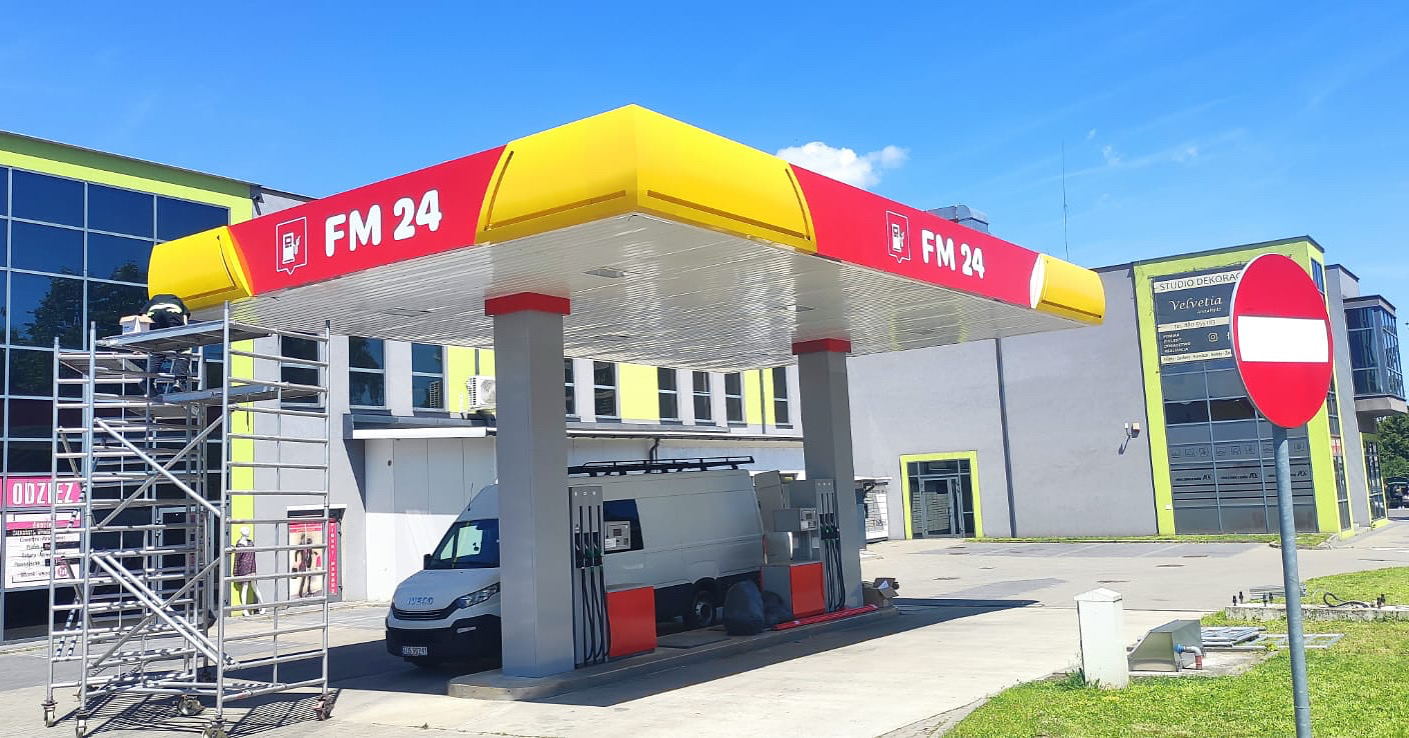
Self-service stations with payment terminals – how to prepare the station
A self-service station with outdoor payment terminals is a solution increasingly chosen by fuel station owners – both for new investments and when modernising existing sites. Drivers refuel and pay at the dispenser themselves, and the station can serve customers even when no one is at the till. For this model to work well, the station must above all be clear: visible from the road, clearly signed and convenient at any time of day.
What is an outdoor payment terminal and how does it work?
An outdoor payment terminal is a self-service payment terminal that works with the dispensers and the station’s sales system. The driver chooses a pump, pays by payment card, fleet card or app, and then refuels – without visiting the till. The exact range of functions, e.g. fleet card support or issuing invoices, depends on the chosen device and system.
With outdoor payment terminals, the station can:
- operate for extended hours or around the clock,
- reduce the number of points requiring permanent till staff,
- shorten the time each driver spends, because payment is made at the dispenser.
This solution often works well in smaller towns, at transport company depots and in places where traffic is spread over the whole day.
What to check before starting
A self-service station, including a version without permanent staff on site (an unmanned station), must meet technical, fire safety and fiscal requirements. For example, in Poland, for self-service LPG refuelling the regulations require station staff to be able to observe the pumps at all times (§ 133 of the Regulation of the Minister of Climate and Environment of 24 July 2023, Journal of Laws 2023, item 1707). The details are best agreed with the station designer, the terminal supplier and the relevant authorities at the planning stage.
Benefits of a self-service station
The main benefits for the owner and customers:
1. Lower day-to-day running costs
Fewer points requiring a cashier to be present at all times helps reduce the station’s daily operating costs. However, equipment servicing, monitoring and a quick response in the event of a breakdown need to be planned.
2. Convenience for drivers
A station that is open in the evening, at night and at weekends is more convenient for customers and can attract new ones.
3. Shorter stops
Paying at the dispenser means the driver does not have to go to the till, so the whole stop is shorter.
4. More possible locations
A self-service station can also be planned on a smaller plot or at a fleet depot, where a traditional station with a shop would not pay off.
Technologies supporting payment terminals
Cashless payments, mobile apps and remote station management are developing quickly, so outdoor payment terminals offer more and more functions. Depending on the system, these may include:
- video monitoring and access control,
- support for fleet cards and fleet systems,
- remote view of sales and equipment operation.
Visibility and signage of an unmanned station
At a self-service station there is no employee to show the way or explain the prices. That is why the elements drivers see before turning off the road, and which lead them straight to the dispenser, are so important:
- a price sign with a clear price display, visible from afar by day and at night,
- a canopy with a fascia in the brand colours and good lighting of the pumps, which increases the sense of safety after dark,
- directional and information signage, including clear instructions at the terminal,
- a consistent visual identity that makes the station recognisable and trustworthy.
New investment or modernisation?
A new self-service station. When planning a new site, it is worth designing the canopy, price sign and signage as a whole from the start – then the station is visible from the road, legible after dark and visually consistent from day one. Example: self-service fuel station in Siemyśl.
Modernisation or rebranding of an existing station. Switching to a self-service model is a good moment to refresh the site’s image: replace the canopy fascia, update the price sign and add signage for the self-service pumps. Example: the refreshed image of the Iwa Tank station in Chorzelów. You can read more about this scope on the fuel station modernisation page.
How we can help
We design, make and install the visual elements of fuel stations that make a self-service station visible, clear and recognisable:
- canopy structures and fascias,
- price signs and price display systems,
- directional and information signage,
- visual identity – a new brand or a refresh of an existing one.
Payment terminals, dispensers and installations are supplied by specialised companies, and we make sure that everything forms a consistent site that is convenient for drivers.
Summary
A self-service station with outdoor payment terminals can extend sales hours, simplify operation and make things more convenient for drivers. Whether you are building a new station or modernising an existing one, it matters a great deal whether drivers notice it from the road and can refuel without difficulty.
Let’s talk about your station
Planning a new self-service station or modernising an existing site? Tell us about your plans – we will suggest how to plan the canopy, price sign and signage so that the station is clearly visible and convenient for drivers.