
 PL
 DE
 CS
 SK
 SV
 HU
 BG
 RO
 UK
 FR
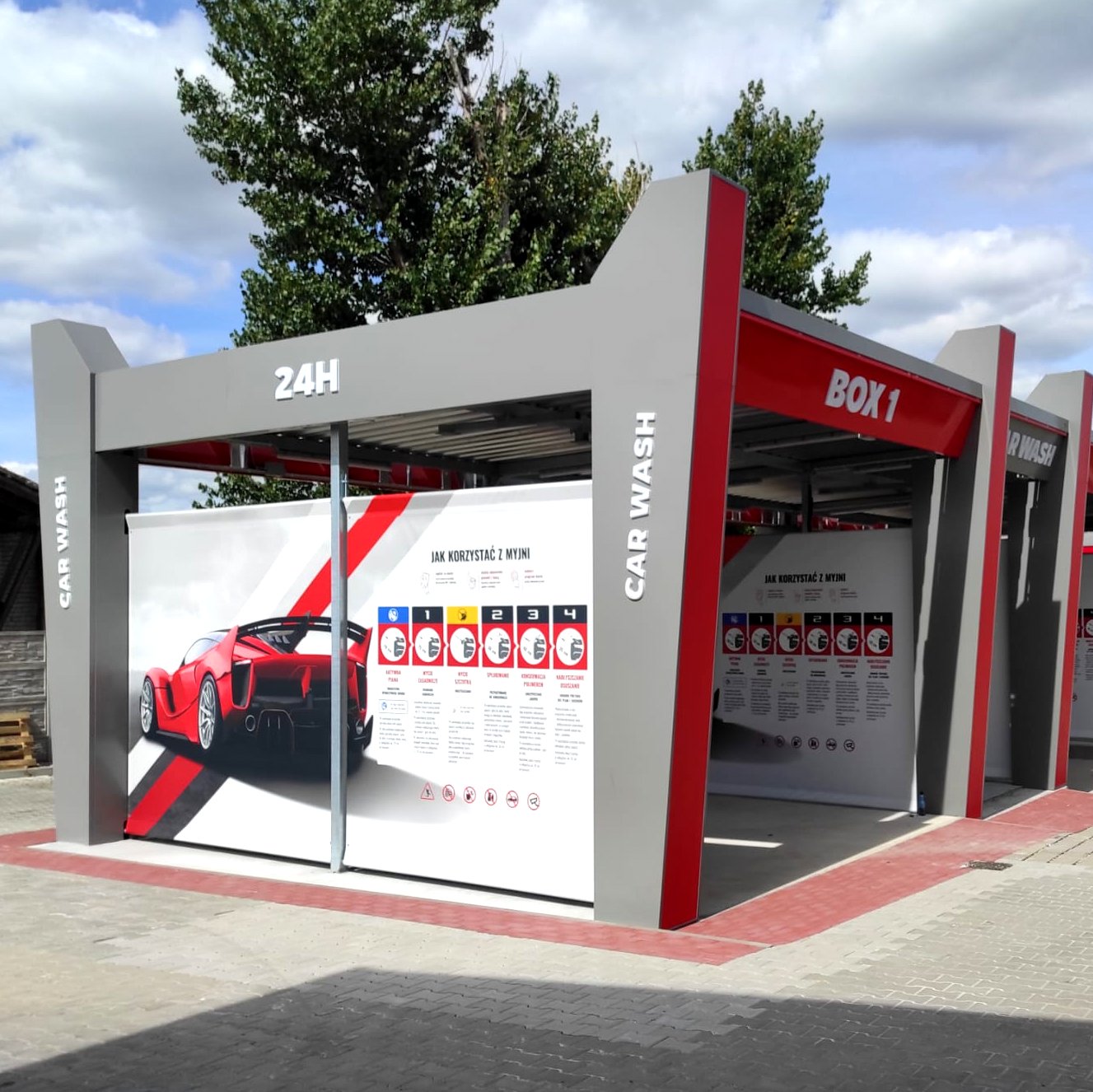
Touchless car wash franchise – does it pay off and what to watch out for?
A franchise in the touchless car wash sector tempts with a simple promise: you get a proven model, a recognisable brand, know-how and support, while you finance the investment and earn from a working site. No wonder phrases such as touchless car wash franchise, car wash franchise and self-service car wash franchise come up more and more often in investors’ conversations. The point is that a franchise is not an automatic guarantee of success. In practice it is a set of advantages and limitations that can work for you or against you – depending on the location, the terms of the agreement and what the operational support really looks like.
Below is a concrete, practical guide: how a franchise works, what it usually includes, where the hidden costs are, how to compare offers and when an “independent site + good contractor” model will be the better option.
How does a franchise differ from an independent car wash?
In the independent option you decide everything: the look of the site, the technology, chemical suppliers, service standards and marketing. In the touchless car wash franchise model some decisions are imposed – in return you get a ready-made concept.
A franchise most often gives you:
- a brand and visual identity,
- a site standard (what should look like what, and how),
- support with the launch and sometimes with choosing the location,
- know-how (wash programmes, chemicals, settings),
- marketing elements and “traffic” from brand recognition.
A franchise most often restricts:
- freedom to choose technology and suppliers,
- the possibility of changing the appearance and signage,
- pricing decisions (sometimes there are recommendations or price ranges),
- the possibility of selling the site on your own terms (agreements sometimes require the franchisor’s consent).
That is why a car wash franchise is not only “you get a brand”, but also “you accept the rules”.
How does a touchless car wash franchise work in practice?
The model can vary, but you will most often come across 3 options:
Option A: you build, the franchisor sets the standard
You receive the standard design, a brand book and technical and visual requirements. You build at your own expense, but you must follow the guidelines.
Option B: the franchisor delivers the investment “turnkey”
Some networks offer to launch a car wash to their standard, sometimes with financing or help with the formalities. It sounds comfortable, but the scope and costs need to be read very carefully.
Option C: a mixed model (your investment + their technology or chemicals)
Sometimes the brand matters less and the key is the know-how and the supply package (chemicals, service, automation). In that case a self-service car wash franchise is more like an operating subscription.
Fees and costs: what do you really pay in a franchise model?
Discussions about a touchless car wash franchise most often overlook the fact that the costs are multi-layered. You may come across:
- an initial (entry) fee,
- a fixed monthly fee,
- a percentage fee on turnover,
- mandatory purchase of chemicals/components from the franchisor (or designated suppliers),
- costs of standard audits, signage updates and system changes,
- service fees (in a package or separately),
- marketing costs (sometimes a marketing fund).
Important: compare offers not only by “how much the franchise costs”, but by how much stays in your pocket after all fees, chemicals, service and energy/water costs.
The biggest advantages of a franchise – when does it make sense?
1) A faster start and a lower risk of “first car wash” mistakes
For an investor without experience, a car wash franchise can limit costly mistakes: poorly chosen programmes, a chaotic layout, unclear operating instructions.
2) A standard that has already proven itself
Networks usually have experience in what works: bay layout, ergonomics, clear messages, choice of chemicals.
3) Brand recognition
In highly competitive locations a brand can help – but only if the network is genuinely recognised in that market.
4) Operational support
If the franchisor really provides training, helps with service and has procedures and analytics, this can be an advantage.
The biggest drawbacks of a franchise – where do investors lose?
1) Less flexibility
In the self-service car wash franchise model you may not be free to:
- add a service you want (e.g. different equipment in the vacuum area),
- change the layout of information and communication,
- introduce local promotions or solutions.
2) “Ongoing” costs
Even when the site is running, the fees can weigh heavily in weaker seasons.
3) Dependence on one supplier
If the agreement requires chemicals or service from a single company, you lose negotiating power.
4) Standards that force modernisations
The network may introduce changes to the appearance, lighting or signage. This can mean additional spending every few years.
The franchise agreement: 12 things you must check
Before you sign the agreement, check (in writing):
- How long is the agreement and what are the termination conditions?
- Are the fees fixed or dependent on turnover?
- What purchases are mandatory (chemicals, parts)?
- What does service look like: response times, costs, responsibility?
- Who is responsible for downtime and breakdowns?
- Can you change prices and your promotional policy?
- What are the quality standards and how are they verified?
- Are there penalties for not maintaining the standard?
- Who pays for changes to the standard / rebranding?
- Do you have territorial exclusivity?
- Can you sell the site (assignment of the agreement)?
- What exactly is included in the package (training, marketing, materials)?
If the franchisor “doesn’t like” putting specifics on paper, that is a warning sign.
Or perhaps independent – but with a good contractor?
Not everyone has to choose a touchless car wash franchise. Sometimes the better solution is:
- an independent car wash,
- but built to a high structural and practical standard,
- with well-planned visibility, lighting and signage,
- with the option of flexible expansion.
In this model the role of a partner who can combine structures and branding with the way customers use the site becomes more important. This is where working with a company such as Aspera makes sense: no promises of miracles – it is about practical elements that affect the result: consistent cladding, structures, a signage system, a clear forecourt, LED elements, modernisations and service. This lets you get close to a “network standard”, but without ongoing franchise fees and without contractual restrictions.
FAQ – answers to questions people really ask
Does a touchless car wash franchise guarantee profits?
No. It guarantees a standard and support (if they are real), but the result depends on the location, traffic, seasonality and how well the site is maintained.
Does a brand always give an advantage?
Only if it is recognised locally and the site is clear, clean and in working order. Customers come back to a car wash that works, not to a logo.
Can I “leave” the franchise after a year?
That depends on the agreement. There are often minimum terms, penalties or restrictions on changing the brand.
Can an independent car wash look and work like a chain one?
Yes – if you plan the layout, visibility, lighting and the standard of the structures from the start. Then you pay for the quality of execution, not ongoing franchise fees.
Summary
A touchless car wash franchise can be a good choice if you value a quick start, a set standard and operational support, and the franchise fees do not eat up your margin. On the other hand, a car wash franchise means restrictions, fixed costs and dependence on the network’s rules. Before you sign the agreement, treat it as an investment: calculate the full cost of the fees, check the service, exclusivity, exit conditions and who pays for modernising the standard.
Whatever the model – franchise or your own brand – you can commission the structure and appearance of the car wash separately: see touchless car wash structures and cladding.
Planning a new investment, a modernisation or a rebranding? Let’s talk about your site.